Termination in Qatar is not just a last payroll run. Employers need a defensible legal route, clear handling of notice and final salary, settlement of unused leave and end-of-service exposure where applicable, and proper sequencing for residence, permit, or employer-change administration for foreign workers. If those layers are handled separately, the exit usually gets slower and riskier than it needs to be.
Qatar offboarding is an employer process, not a payroll stop
The most common Qatar offboarding mistake is treating the exit as a finance task with some paperwork attached. It is the reverse. The employer needs a clean legal route, clear documentation, and a controlled settlement process before the final payment is even released.
That matters because foreign-worker offboarding in Qatar often connects the employment exit to a wider residence or employer-status workflow. If the process is fragmented, the worker feels it immediately and the employer usually ends up firefighting avoidable issues.
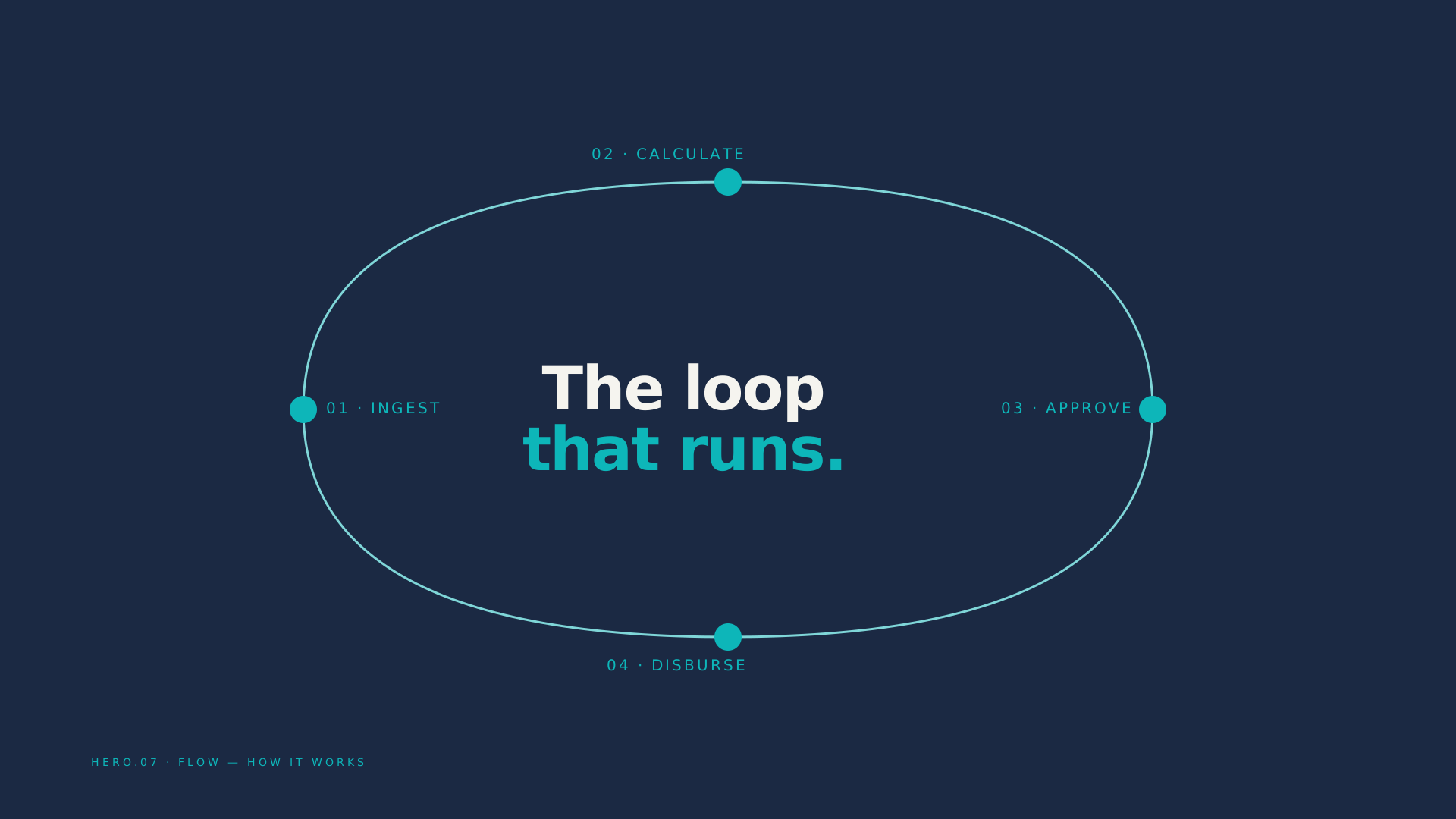
A strong Qatar process is therefore structured from the start. The route is confirmed first, then the settlement and worker-status steps follow in order.
What a defensible Qatar final settlement should cover
A defensible Qatar settlement should cover the termination basis, notice treatment, outstanding salary, unused leave balances, and end-of-service exposure where the case requires it. Those items should be understood before the company communicates a final number.
The point is not to over-lawyer a normal exit. The point is to stop contradiction between HR, payroll, and the worker.
If the business cannot explain what is being paid and why, the route is already weaker than it should be.
Residence and employer-status administration still matter
For foreign workers, offboarding in Qatar usually involves more than the employment contract itself. Residence or permit-linked administration, and sometimes employer-change assumptions, can sit close to the end of the employment route and have to be handled in the right order.
That is why providers that only talk about payroll are not really managing the case. They are managing the least complicated part of it.
A serious employer or EOR should be able to show how the worker-status close-out fits into the exit before the termination is actioned.
What a controlled Qatar exit looks like
A controlled Qatar exit starts with route confirmation, financial review, and internal alignment between HR, payroll, and whoever owns the worker-status administration. Only after that should the formal termination and final settlement move.
That order matters because once the exit is live, delay and inconsistency become visible fast to both the employee and the internal team.
The best Qatar offboarding processes feel calm because the sequence was planned early, not improvised at the end.